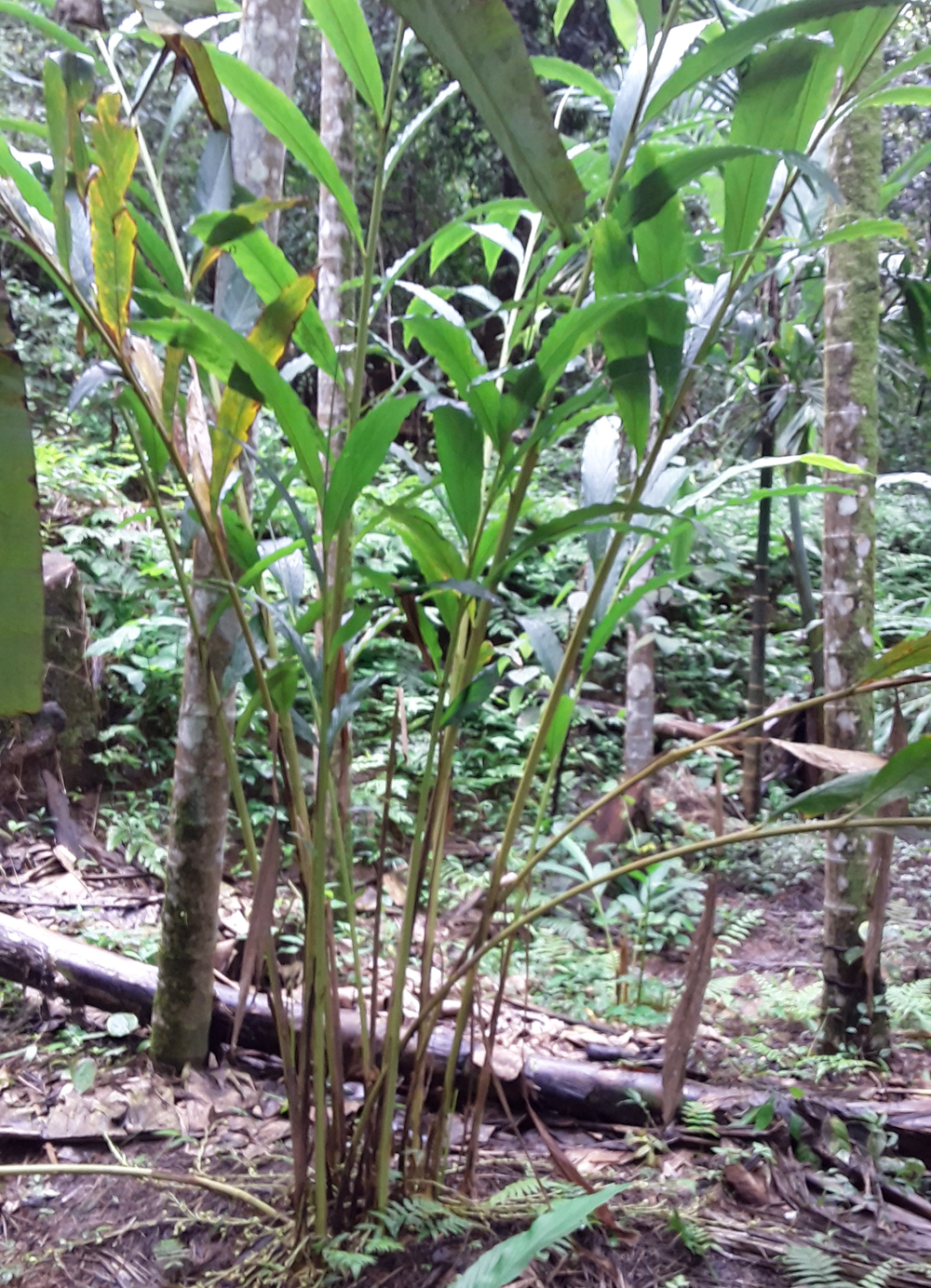
A rainforest native, cardamom is known for its unique blend of gentle aroma, slightly sweet, and complex flavour. Cardamom is locally known as Yalakki or Elakki or Elaichi – the name is derived from Sanskrit text ela. Havyaka sweet dishes are incomplete without cardamoms.
Cardamom comes from the ginger family but has two main genus lines: Elettaria and Amomum. We cultivate Elettaria cardamomum type.
Botanical Name: Elettaria cardamomum
Family: Zingiberaceae
Plant Type: Herbaceous, perennial
Sun Exposure: Partial, shade
Soil Type: Loam
Soil pH: Acidic
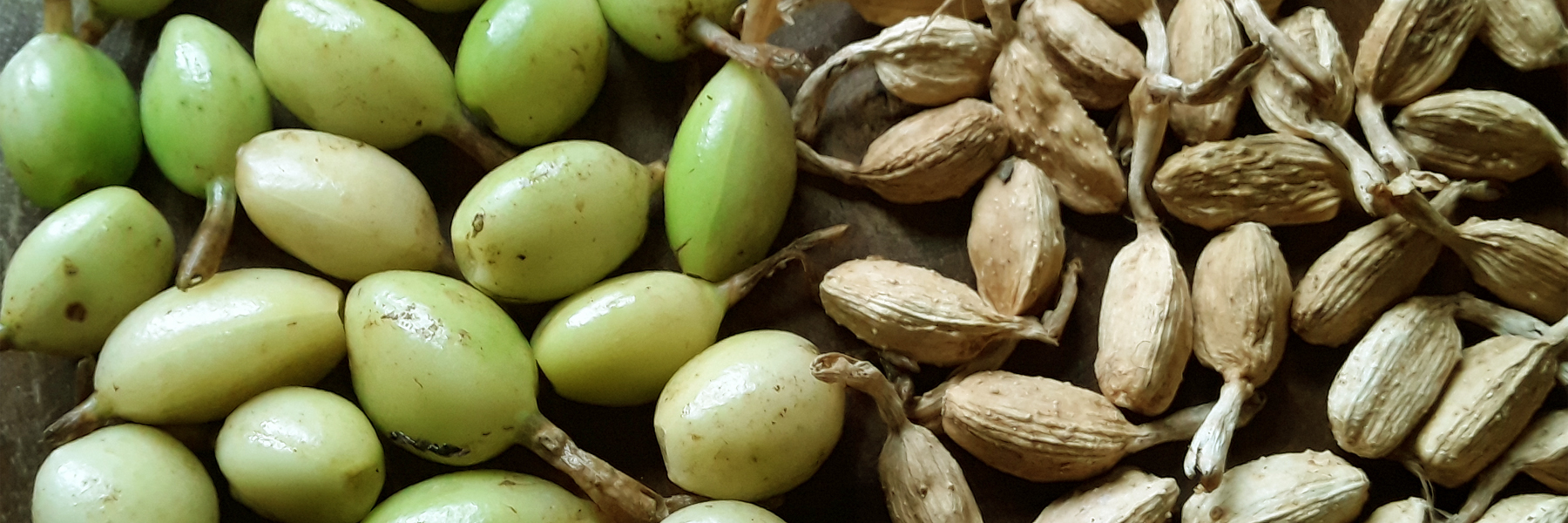
Colour
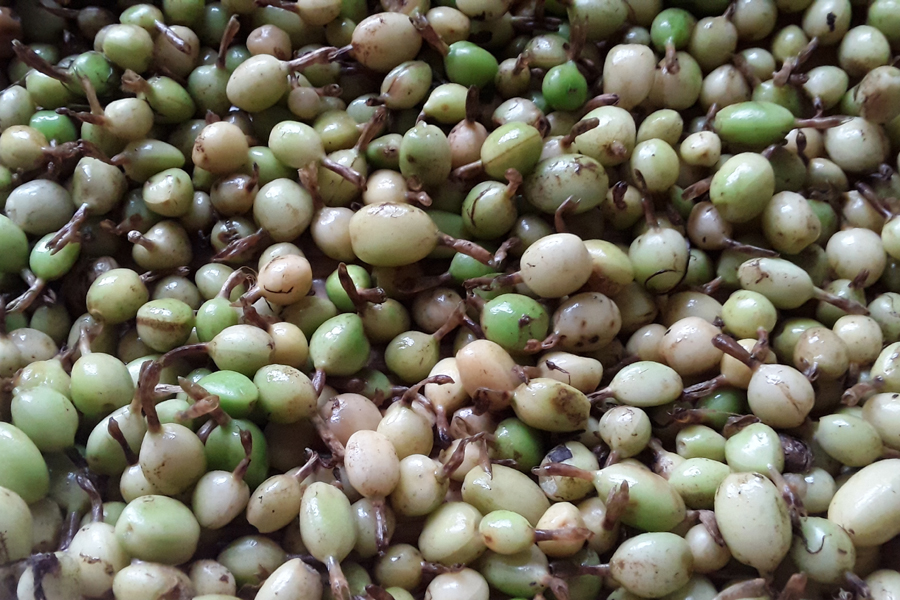
Unripe capsule - light green
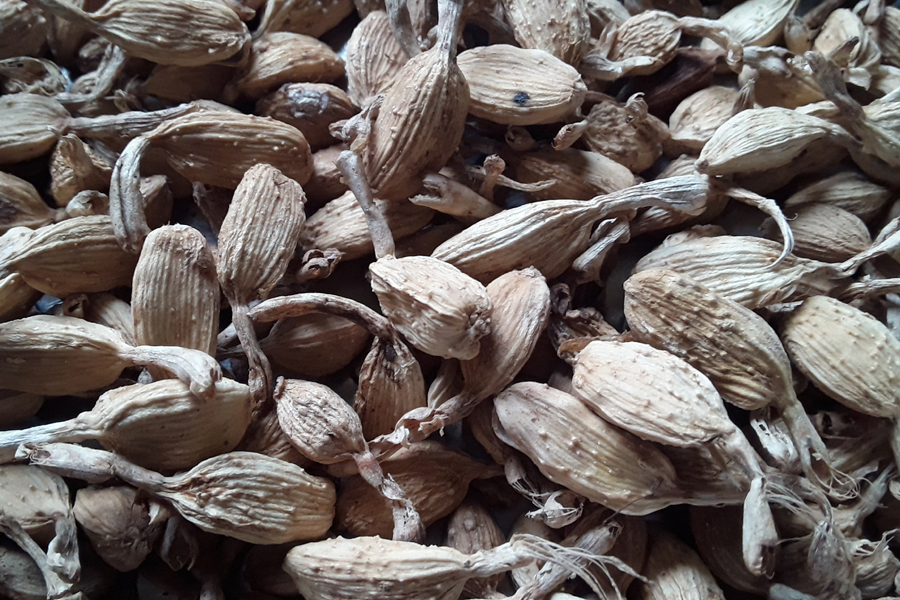
Ripe capsule - light yellow
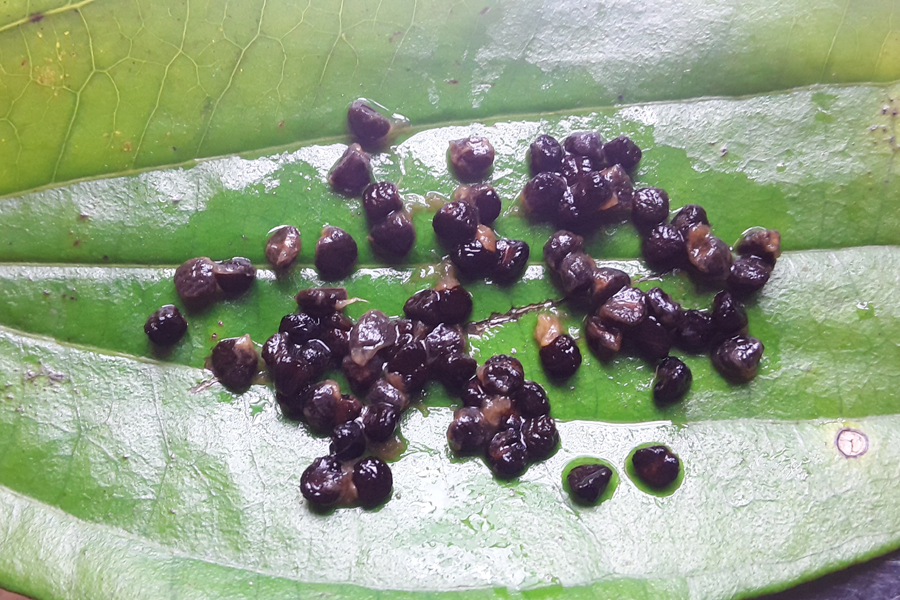
Seed - black / dark brown
Uses
Cardamom is used for flavouring various preparations of food, and beverages. Cardamom is also used medicinally in traditional practices.
Cultivation
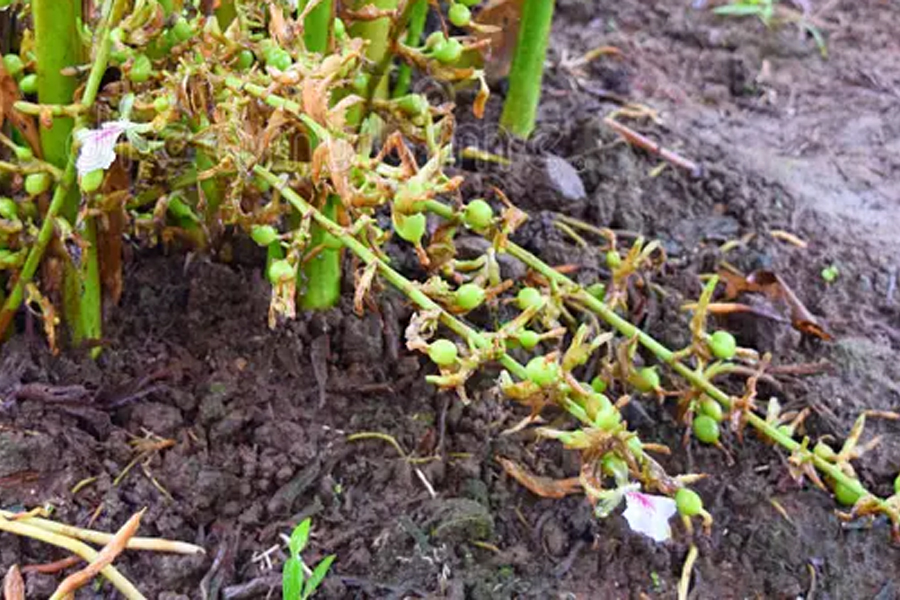
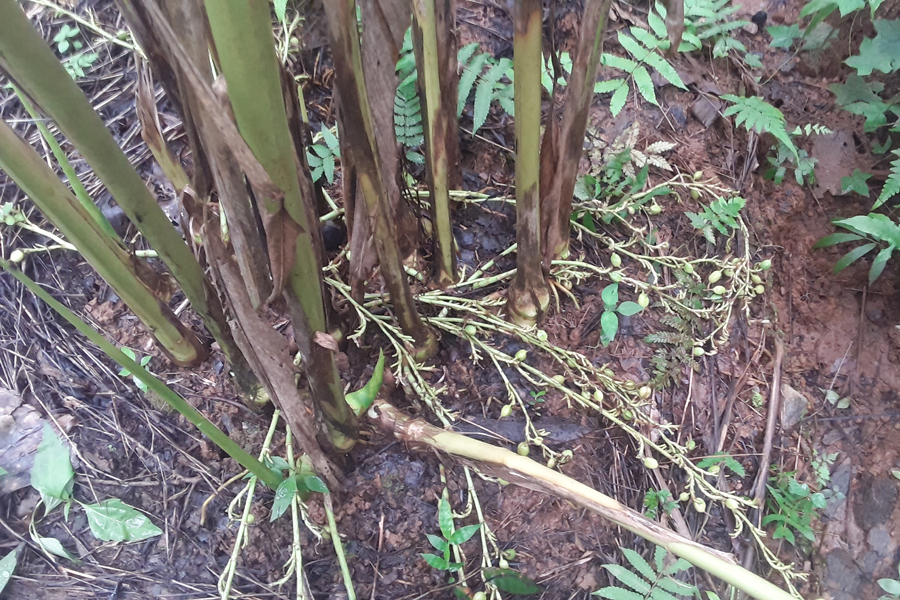
We cultivate Malabar variety and these plants have floral racemes (which bear the pods) that grow horizontally along the ground.
Cardamom flowers and fruits will only grow in tropical conditions with temperatures between 10°C and 35°C and well-distributed rainfall (150-400 cm). Thick shady areas with fertile loamy soil are ideal for cultivating cardamom. Cardamom plants are not planted in direct sun. Adequate drainage must be provided.
Our established areca nut farm is perfect to grow cardamom with natural shade from areca nut trees, fertile soil, and a proper drainage system.
Propagation is primarily done from healthy seeds of fully ripe capsules. After 8-9 months seedlings are transplanted in raised nursery beds 15 cm part. (This step is optional when plants are in small numbers.) After one year the seedlings are planted in areca nut farm.
Generally Cardamom is grown as a rainfed crop, but supplementary irrigation is provided to overcome the dry spells during summer. We provide natural compost to cardamom plants.
Harvest and production
Cardamom plants normally start bearing two years after planting. Flowering starts in and around May. Harvest period is August to November. Ripe cardamom seed pod or capsule or fruit is hand-picked at intervals of 7 to 15 days.
Harvested capsules are washed thoroughly and cleaned to remove any foreign matter. Then the capsules are sun dried and stored.